


The Harry Winston robbery most people are searching for refers to two brazen heists at the brand’s Paris boutique, one in October 2007 and a far larger one in December 2008 that press coverage still calls the “break-in of the century.” Together the pair of robberies caused the jeweler to lose a significant amount of diamonds and jewelry, triggered a years-long international manhunt, and ended with eight men jailed in 2015, including alleged ringleader Doudou Yahiaoui, who received a 15-year sentence. Investigators recovered significant caches, including cash hidden in a plaster wall and a large diamond stashed in a jar of face cream, yet roughly 493 items were still reported missing even after the trials wrapped.
A few names anchor the entire story. Harry Winston is the luxury jeweler targeted twice within fourteen months. Farid Allou and Doudou Yahiaoui are the suspects most closely tied to the case in French court reporting. Interpol and press coverage repeatedly raised the Pink Panthers, a loosely organized international jewel theft network, as a likely source of the tactics used.
- Two separate armed robberies hit the same Paris boutique in 2007 and 2008.
- Combined losses were estimated at well over $100 million at the time.
- Eight men were convicted in 2015; sentences ran as high as 15 years.
- Hundreds of pieces, an estimated 493, were never recovered.
Quick fact: The December 2008 haul alone was valued at roughly €80 million, or about $100 to $102 million at the time, making it one of the largest jewelry thefts in French history.
Key Takeaways
The Harry Winston robbery refers to two Paris heists in 2007 and 2008 that together cost well over $100 million, ended in eight convictions, and left roughly 493 items permanently missing.
| Point | Details |
|---|---|
| Two separate heists | October 2007 ($36.6 million) and December 2008 (roughly €80 million) hit the same Paris boutique. |
| Convictions secured | Eight men were jailed in 2015, with sentences up to 15 years for the alleged mastermind. |
| Recovery gap persists | Roughly 493 items were never recovered despite significant seizures, including cash hidden in a wall. |
| Organized crime suspected | Interpol and press coverage pointed to Pink Panther-style tactics, though no formal link was proven in court. |
| Documentation matters | Platforms like Jewelcloud show how standardized product data and imagery can speed identification if theft ever happens. |
Table of Contents
- What Was the Harry Winston Robbery Timeline?
- How Did the Robbers Pull Off the Heists?
- Who Was Arrested, and What Happened at Trial?
- Were the Pink Panthers Behind the Harry Winston Heists?
- What Was Recovered, and What Is Still Missing?
- Why Do Jewelry Heists Like This Keep Happening?
- What the Harry Winston Case Still Teaches the Jewelry Industry
- How Structured Inventory Data Helps After a Theft
- Sources
What Was the Harry Winston Robbery Timeline?
The two Paris incidents didn’t happen in isolation. They were separated by roughly fourteen months, and the second robbery dwarfed the first in scale and audacity.
- October 6, 2007: Four hooded thieves entered the Harry Winston boutique on Avenue Montaigne and made off with an estimated $36,683,000 in jewels, a haul that already ranked among the biggest jewelry thefts of the decade.
- December 5, 2008: A larger, more theatrical crew struck the same store, this time armed with a hand grenade and a .357 Magnum. Press estimates put the loss at around €80 million.
- 2009 to 2011: French police made a series of arrests as wiretaps, informant tips, and forensic leads connected suspects to both robberies.
- March 2011 and later: Court proceedings advanced, eventually producing convictions for eight men, sentenced up to 15 years.
- February 2015: Sentencing concluded, closing out one of France’s longest-running jewel theft prosecutions.
Both robberies shared a signature: fast execution, minimal witnesses engaged directly, and a level of familiarity with the store’s layout that suggested more than luck. Al Jazeera’s coverage of the aftermath framed the December raid as the “break-in of the century,” a label that stuck later in reporting.
How Did the Robbers Pull Off the Heists?
Disguise did most of the heavy lifting. The entire operation, from entry to exit, reportedly took only 15 to 20 minutes.
That speed wasn’t improvised. The thieves knew where the good stock was kept.
- Robbers reportedly addressed staff by name and moved directly toward off-display inventory, a detail that suggests prior surveillance or an inside source.
- One account describes a robber locating “la grosse pierre,” a large diamond ring sometimes cited as a 31-carat stone, with a precision that pointed to advance intelligence on the store’s most valuable piece.
- Entry methods combined social engineering (posing as customers or delivery personnel to get buzzed in) with brute intimidation once inside.
- The 2007 incident relied more on stealth and speed; the 2008 raid leaned harder on weapons and disguise.
Security protocol gaps compounded the problem. Reporting on the case pointed to lapses such as keys or access details handled outside normal channels and guards who weren’t positioned to intervene quickly. Multiple outlets, including BBC coverage of the case, describe employees being singled out by name, a chilling detail that still shapes how retailers train staff today.
Pro Tip: If you run a high-value retail counter, treat any staff-by-name interaction from an unfamiliar customer as a red flag worth a discreet check-in, not just good service. Criminals who know your team’s names have usually done their homework.
Who Was Arrested, and What Happened at Trial?
French investigators built their case slowly, using a mix of wiretaps, informants, and physical evidence. Court reporting names Farid Allou and Doudou Yahiaoui among those tied most directly to the case, with Yahiaoui identified in press coverage as the alleged mastermind behind the coordinated plot.
Small mistakes mattered as much as big breaks. Left-behind items, distinguishing accents caught on surveillance audio, and forensic traces gave police the threads they needed to move from a headline crime to named suspects, a pattern common in organized jewelry theft investigations generally.
By 2015, the prosecutions concluded.
| Reported Detail | Figure |
|---|---|
| 2007 robbery estimated value | $36,683,000 |
| 2008 robbery estimated value | Roughly €80 million ($100–102 million) |
| Men convicted (2015) | Eight |
| Longest sentence handed down | 15 years |
| Items reported still missing | Roughly 493 |
- Evidence at trial reportedly included wiretaps, seized valuables, and forensic material linked to abandoned items at the scenes.
- Reporting notes some uncertainty in attribution for lower-level participants, even as the core group’s involvement was treated as established.
- Sentences varied by role, with the alleged organizer receiving the longest term.
Were the Pink Panthers Behind the Harry Winston Heists?
Investigators never proved a direct organizational link, but the circumstantial case for an organized network was strong enough that Interpol and multiple outlets treated it as the leading theory. The Pink Panthers, a nickname given to a loose international network blamed for dozens of high-end jewelry thefts worldwide, have a documented habit of hiding stolen gems in mundane objects, including cosmetics jars, a detail that echoed the face-cream discovery in the Harry Winston case.
Several other factors pointed toward organized crime rather than a one-off crew:
- The planning complexity, disguise coordination, and knowledge of stock locations matched patterns seen in other Pink Panther-linked jobs.
- Cross-border smuggling routes and established fences would have been necessary to move that volume of unregistered stones quickly.
- The repeat targeting of the same boutique within 14 months suggested a group confident enough in its methods to return.
Investigators were careful not to overstate the connection. Reporting on the case makes clear that while tactics resembled Pink Panther methods, French authorities never secured a courtroom finding that formally tied the convicted men to that broader syndicate. The label stuck in headlines more firmly than it stuck in verdicts.
What Was Recovered, and What Is Still Missing?
Police did recover meaningful caches after the arrests. Reporting describes roughly €800,000 in cash found hidden inside a plaster wall and at least one large diamond recovered from a container of face cream, the kind of household-object concealment associated with organized fencing operations.
Even with those seizures, the gap between what was stolen and what came home stayed enormous.
- Press accounts put the number of items never recovered at roughly 493 pieces, a figure that has held steady across multiple reports since the trials concluded.
- Gemstones extracted from settings during resale attempts sometimes suffered damage, reducing their value even when eventually recovered.
- Cross-border trafficking routes made tracing individual stones difficult once they left France, since unset diamonds carry no serial number and can be recut to erase identifying characteristics.
Quick fact: Even recovered pieces aren’t always simple to return. A damaged stone can lose enough value in reworking that insurers and original owners still end up in dispute over what it’s actually worth.
Why Do Jewelry Heists Like This Keep Happening?
High-end jewelry makes an unusually attractive target because it fails almost every test that makes other high-value goods traceable. A diamond has no serial number. A ring can be melted down or recut in an afternoon. A duffel bag of unset stones is worth more, pound for pound, than almost anything else a thief could carry out a door, and it crosses a border without triggering the alarms that would follow a similar amount of cash.
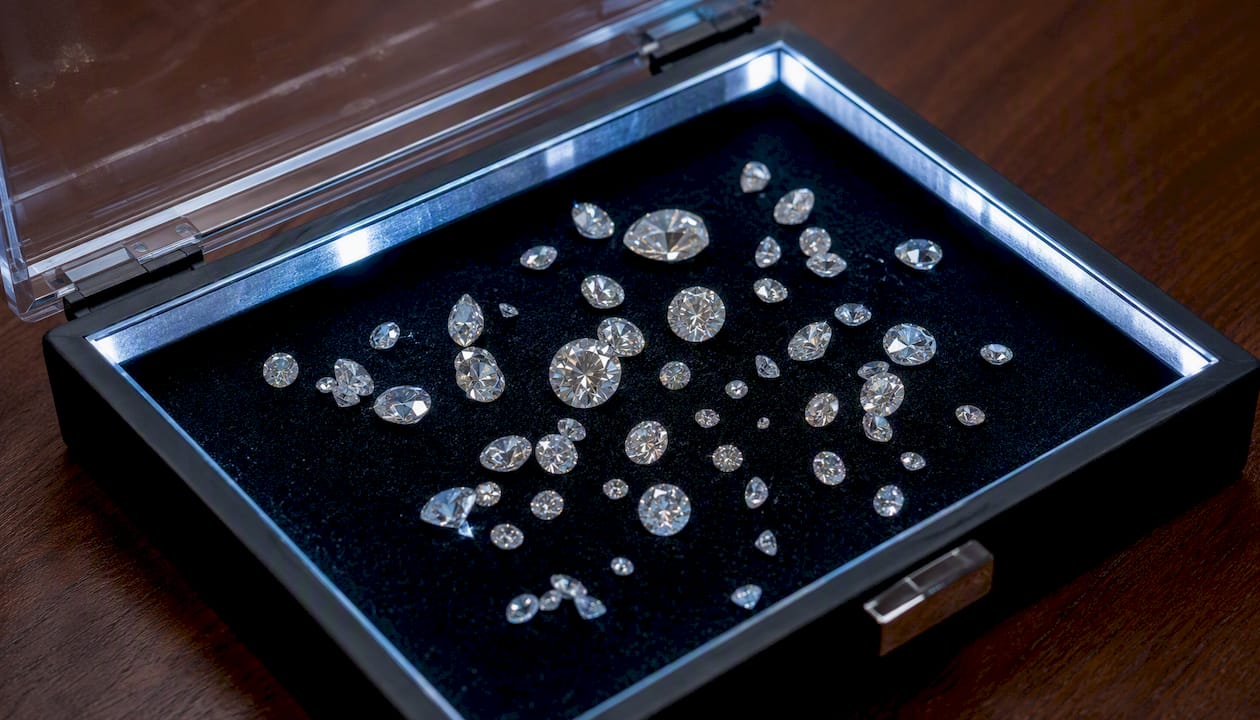
That combination, portability, anonymity, and liquidity, is exactly what Al Jazeera’s analysis of the case pointed to when explaining why luxury jewelry theft is fundamentally harder to deter than a bank robbery.
For jewelers, the practical response comes down to a handful of concrete measures:
- Rotate and randomize which employees have access to off-display stock, so no single staff routine becomes predictable to outside observers.
- Handle keys and access codes through verified channels only, never informally passed off-site.
- Layer physical deterrents, including reinforced window film for street-level retail, with camera redundancy that covers blind spots near entry points.
- Keep certified gem reports, laser inscriptions, and high-resolution photographs on file for every high-value piece, since that kind of metadata is what actually lets police and international registries match a recovered stone to its rightful owner.
Pro Tip: Retailers that already keep standardized product data for their online catalogs have a head start here. The same photos and gemological details that sell a piece online are exactly what an insurer or detective needs after a theft.
What the Harry Winston Case Still Teaches the Jewelry Industry
The Harry Winston robberies get retold as a caper story, disguises, a hand grenade, a diamond hidden in face cream, but the more useful lesson sits in the boring parts of the record: the 493 pieces never found, the stones damaged during resale, the years it took wiretaps and informants to turn a headline crime into a courtroom conviction. Organized jewelry theft doesn’t get solved by better locks alone. It gets solved, when it gets solved at all, by evidence trails that existed before the crime happened.

That’s the piece the industry still underrates. A store with airtight physical security but sloppy inventory records is still exposed, because recovery depends on proving what a stone looked like before it disappeared. Cross-border cooperation between police forces matters, but so does the unglamorous work of documenting inventory well enough that a recovered item can actually be matched back to its rightful owner months or years later.
How Structured Inventory Data Helps After a Theft
Nobody plans for a robbery, but the jewelers who recover fastest from one usually aren’t relying on memory to describe what was stolen. Incomplete product records, vague descriptions, missing certificates, photos that only exist on someone’s phone, slow down both police investigations and insurance claims at exactly the moment speed matters most.

Jewelcloud exists to solve a version of this problem every day, just from the supply side. When your catalog runs on standardized, SKU-level product data instead of scattered spreadsheets, every piece already has the photography, gemological detail, and provenance metadata that a claims adjuster or detective would need to identify it. That’s not a security product, it’s a byproduct of running your inventory the right way in the first place. Retailers using Jewelcloud’s vendor membership platform get that structure built in from day one, rather than trying to reconstruct it under pressure. If you want to see what a properly documented catalog looks like before you ever need it, learn more about Jewelcloud and check whether your current setup would hold up if you had to prove what you had. This article is informational and not a substitute for legal or insurance advice specific to your situation.
Sources
Readers who want to verify these details or dig deeper into original reporting can start with the following.
- The Harry Winston Diamond Heists: Solving an Unsolvable Crime
- Harry Winston Paris jewellery heists: Eight jailed - BBC News
- Armed men in wigs pull off £70m robbery at top Paris jewellery store
- The Heist at Harry’s
- Jewels stolen in $102m Paris heist