


A retail partnership is defined as a formal distribution agreement between a jewelry designer and a retailer that gives the brand access to new customers, shelf space, and marketing support. These relationships are the fastest way for independent designers to scale beyond their own channels. The best jewelry designer retail partner examples share three traits: structural clarity, shared customer alignment, and ongoing data collaboration. Common partnership structures include consignment, royalty agreements, pop-up events, and long-term wholesale collaborations. Each model carries different risk and reward profiles, and choosing the right one depends on your brand’s stage, cash flow, and growth goals.
1. What are the main types of jewelry designer retail partnerships?
Consignment and royalty agreements are the two most common entry-level structures for jewelry designers entering retail. Consignment means the retailer displays your product and pays you only after a sale. Royalty agreements pay you a percentage of revenue on an ongoing basis, which works well for licensed designs or branded collections.

The key difference is cash flow timing. Consignment delays your payment, while royalty structures create predictable income tied directly to sales volume.
Other formats include:
-
Wholesale accounts: You sell inventory to the retailer at a set price. They own the stock and set their own retail price.
-
Pop-up collaborations: Short-term, time-limited events inside an existing retail space. Low commitment, high visibility.
-
Co-branded collections: You and the retailer co-develop a product line. Both parties share marketing costs and revenue.
-
Digital wholesale platforms: You list your catalog on a B2B platform, and retailers source from it without requiring physical stock transfers.
Pro Tip: Before signing any consignment agreement, get the insurance and display terms in writing. Designers often bear the cost of damaged or stolen stock, and unclear agreements lead to unsold inventory sitting in a back room.
2. Consignment risks every jewelry designer should know
Consignment carries real financial risk that many designers underestimate at the start. If a retailer does not actively promote your pieces, they sit unsold. You still own them, but you have no control over how they are displayed or marketed.
Insurance responsibility is the most overlooked clause in consignment deals. If your jewelry is damaged or stolen in the retailer’s store, the question of who pays is often left unanswered in informal agreements. Always clarify this in writing before placing a single piece.
Unsold inventory is the other major risk. Retailers have no financial incentive to push consignment stock the way they push products they have already paid for. Set a review period of 60 to 90 days and build a recall clause into the contract.
3. Luv AJ’s decade-long Target partnership
Luv AJ is one of the most cited jewelry manufacturer retailer partnership examples in the industry. The brand partnered with Target over a decade, starting with placement in 300 stores and scaling to a planned 1,800 locations within a single year. That kind of growth does not happen by accident.
The preparation behind that expansion took two years of intensive work before the larger rollout. Luv AJ spent that time aligning product pricing, packaging, and supply chain capacity to meet Target’s volume requirements. The lesson here is that large retail partnerships require you to be operationally ready before the opportunity arrives, not after.
Monitoring sell-through rates was central to the partnership’s success. KPI tracking including sell-through rates and brand awareness metrics gave both parties clear data to adjust product mix and promotional timing. That kind of regular, data-driven review is what separates a growing partnership from a stalled one.
The takeaway for designers: Start smaller than you think you need to. Build the operational infrastructure first. Then scale.
4. Emily Warden Designs and the pop-up model
Emily Warden Designs used a 5-day in-store pop-up to test market demand and generate immediate sales. The event featured personalized styling and a cross-promotional incentive: a $500 purchase incentive tied to a partner brand. That structure drove foot traffic and created a reason for shoppers to act during the event window.
Pop-up retail collaborations work because they are low-risk for both parties. The retailer gets fresh product and event energy. The designer gets real customer feedback, live sales data, and brand exposure without a long-term inventory commitment.
The Emily Warden example also shows the value of pairing a pop-up with a new collection launch. The event coincided with the debut of a birthstone signet collection, which gave press and social media a clear story to tell. Timing your pop-up around a product launch multiplies the visibility you get from the same effort.
5. How professional presentation wins retail buyers
First impressions with retail buyers depend on formal, specific outreach. A vague email with a lookbook attached will get filtered out. A clear business proposal that specifies your target price range, product categories, minimum order quantities, and lead times signals that you are a serious vendor.
Buyers at mid-to-large retailers review dozens of vendor pitches. Your proposal needs to answer their practical questions before they ask them. Include your wholesale pricing structure, your production capacity, and your return policy in the first document you send.
Here is what a strong initial outreach package includes:
-
A one-page brand overview with your target customer profile
-
A product catalog with wholesale prices and retail price suggestions
-
Your minimum order quantity and lead time
-
Professional product photography on clean backgrounds
-
References from existing retail accounts if you have them
Pro Tip: Address your outreach to a specific buyer by name, not “To Whom It May Concern.” Research the retailer’s current jewelry assortment and explain in one sentence why your line fills a gap in it.
6. Technology and structured data in retail partnerships
Retail readiness in 2026 means providing structured product data that retailers can pull directly into their systems. This includes gemstone weights, certifications, metal specifications, and professional photography formatted for web listings. Retailers who can list your products without manual data entry will prioritize you over vendors who require extra work.
API integration is the next level. When your product data connects directly to a retailer’s inventory system, both parties benefit from real-time accuracy. Stock levels, pricing updates, and new arrivals sync automatically. This reduces errors and speeds up the time from new collection to live listing.
Virtual inventory is the third capability that retail buyers increasingly expect. It lets retailers display your full catalog online without holding physical stock. Shoppers see the product, place an order, and you fulfill it. This model removes the retailer’s inventory risk entirely and makes it much easier for them to say yes to carrying your line. Jewelcloud is built specifically for this workflow, giving designers a structured way to share their catalog with retail partners digitally.
You can see how product display quality directly affects conversion rates when your items appear on a retailer’s site. Investing in structured data and clean photography is not optional for designers who want serious retail accounts.
7. Cross-promotional partnerships and seasonal collaborations
Cross-promotional retail partnerships pair two complementary brands inside a shared retail space or event. The Emily Warden Designs pop-up is one example, but the model applies broadly across the jewelry industry. A fine jewelry designer might partner with a bridal boutique for a trunk show. A fashion jewelry brand might collaborate with a clothing retailer for a seasonal capsule display.
The defining feature of these partnerships is a shared customer. Both brands target the same buyer, so the collaboration feels natural rather than forced. When the customer base overlaps, cross-promotional incentives like bundled discounts or gift-with-purchase offers drive higher average transaction values for both parties.
Seasonal timing matters. Holiday windows, Valentine’s Day, and Mother’s Day are the highest-traffic periods for jewelry retail. Launching a pop-up or cross-promotional event during these windows gives you built-in consumer urgency. Retailers are also more receptive to new vendor conversations in the months leading up to peak season, typically august through october.
These short-term formats complement long-term retail strategies. They let you test a retailer’s customer base before committing to a wholesale account. They also give you sales data and customer feedback that strengthens your pitch for a permanent placement.
8. Monitoring KPIs to sustain retail partnerships
Setting KPIs at the start of a partnership is the difference between a relationship that grows and one that quietly fades. Industry guidance recommends tracking sell-through rates, brand awareness metrics, and reorder frequency as the core measures of partnership health. Each metric tells you something different about how the relationship is performing.
Sell-through rate measures what percentage of your placed inventory actually sells within a set period. A low sell-through rate signals a product mix problem, a display issue, or a pricing mismatch. Catching it early lets you fix it before the retailer decides to reduce your floor space.
Schedule a formal review meeting with your retail partner every 60 to 90 days. Bring data. Show what sold, what did not, and what you plan to do about it. Retailers respect vendors who come prepared with numbers and a plan. That behavior builds the trust that leads to expanded placement and longer contracts. You can support this process by exploring retail growth strategies that use modern platform tools to keep your data current and accessible.
Key takeaways
The most successful jewelry designer retail partnerships combine the right structure, strong operational readiness, and consistent KPI monitoring to drive lasting growth.
| Point | Details |
|---|---|
| Choose the right structure | Match your partnership model (consignment, royalty, pop-up, wholesale) to your cash flow and production capacity. |
| Protect yourself in consignment | Get insurance, display terms, and recall clauses in writing before placing any inventory. |
| Prepare operationally before scaling | Luv AJ spent two years building supply chain capacity before expanding to 1,800 Target locations. |
| Use structured data to win buyers | Retailers prioritize vendors who supply API-ready product data and virtual inventory capabilities. |
| Track KPIs every 60 to 90 days | Sell-through rates and reorder frequency reveal partnership health before problems become permanent. |
What I’ve learned about picking the right retail partner
The most common mistake I see jewelry designers make is treating a retail partnership as a destination rather than a working relationship. You land the account, ship the product, and then wait. That passive approach is how good partnerships go flat.
The designers who sustain and grow their retail accounts treat them like a second business. They track sell-through data, show up to buyer meetings with numbers, and proactively suggest product adjustments based on what is actually moving. That level of engagement is rare, and retailers notice it.
On consignment specifically: I think the risk is underestimated across the board. Designers focus on the exposure and gloss over the insurance gap. If your pieces are displayed in a retailer’s case and something goes wrong, “we assumed they were covered” is not a legal position. Get it in writing every time.
The technology piece is where I see the biggest gap between designers who scale and those who plateau. Retailers are moving toward vendors who can plug into their systems cleanly. If your product data lives in a spreadsheet and your photos are inconsistent, you are creating friction for the buyer. Remove that friction and your acceptance rate goes up.
Finally, do not underestimate the pop-up format. Designers often see it as a consolation prize compared to a permanent wholesale account. It is not. A well-executed 5-day event gives you live customer data, press coverage, and a relationship with the retailer that a cold email pitch never could.
— Anthony
Jewelcloud makes retail partnerships easier to manage
Building retail partnerships takes real effort. Managing them at scale takes the right infrastructure.
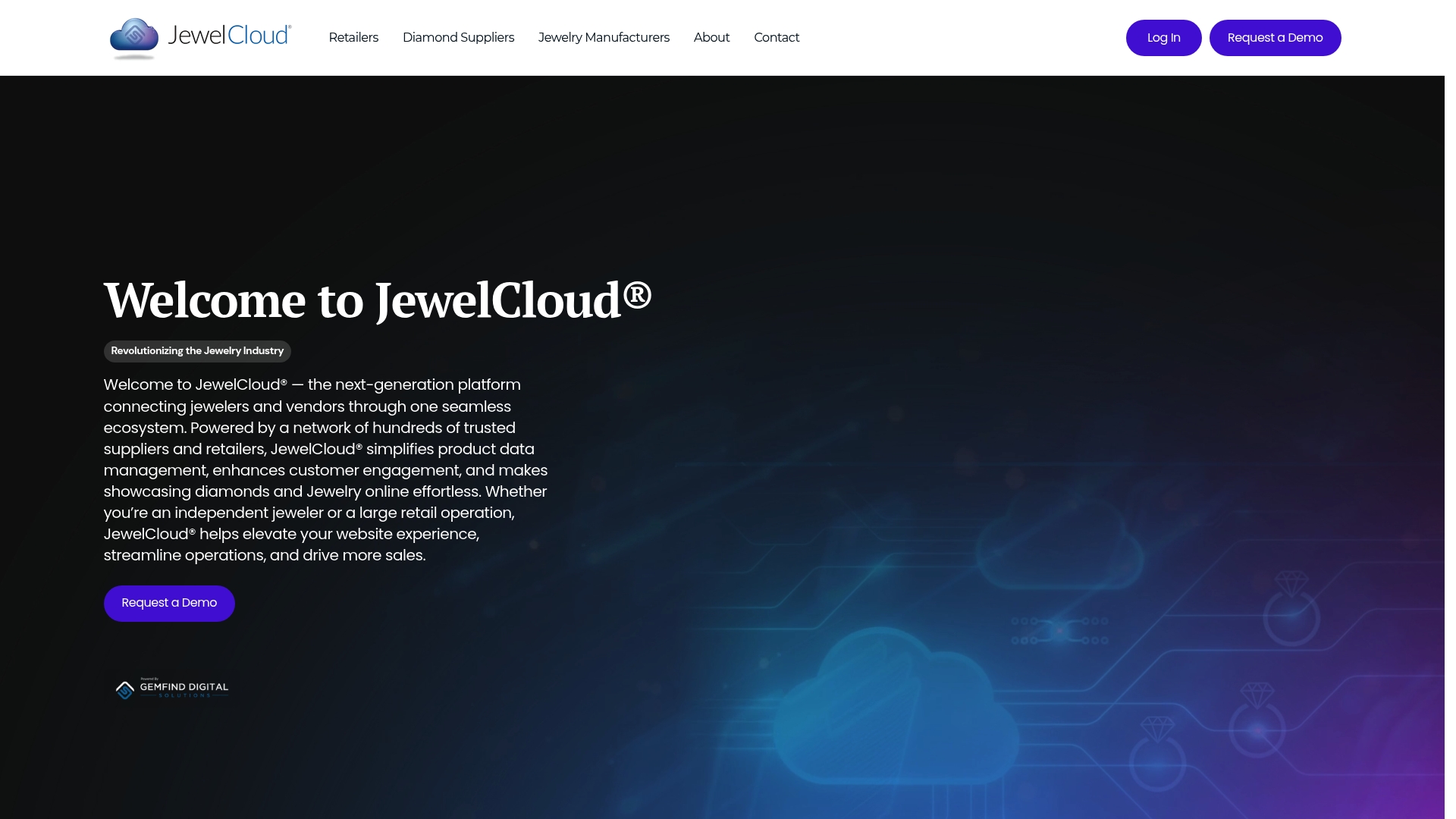
Jewelcloud is a B2B jewelry platform built for designers, manufacturers, and diamond dealers who want to reach qualified retail partners without the burden of physical inventory transfers. Your product data is structured, standardized, and ready for retailer integration the moment you load it. Retailers access your full catalog digitally, list your products on their sites, and place orders directly through the platform. You get broader distribution without the overhead of managing individual wholesale accounts manually. Learn more about how Jewelcloud works or review the full list of vendor benefits available to designers on the platform.
FAQ
What is a jewelry designer retail partnership?
A jewelry designer retail partnership is a formal agreement where a designer distributes products through a retailer’s channels in exchange for shelf space, marketing support, or revenue sharing. Common structures include consignment, wholesale accounts, and pop-up collaborations.
How did Luv AJ scale its retail presence so quickly?
Luv AJ spent two years preparing operationally before scaling from 300 to a planned 1,800 Target locations. That preparation included aligning pricing, packaging, and supply chain capacity to meet the retailer’s volume requirements.
What KPIs should jewelry designers track in retail partnerships?
Sell-through rates, brand awareness metrics, and reorder frequency are the core KPIs for retail partnership health. Review these with your retail partner every 60 to 90 days to catch problems early and adjust your product mix.
What is the biggest risk in consignment jewelry partnerships?
The biggest risk is unclear insurance and display responsibilities. Designers often bear the cost of damaged or stolen stock, and without a written agreement, unsold inventory can sit in a retailer’s back room indefinitely.
How does structured product data help designers win retail accounts?
Retailers prioritize vendors who supply clean, API-ready product data including gemstone weights, certifications, and professional photography. Structured data reduces the retailer’s workload and speeds up the time from agreement to live listing.