


The fastest way to launch jewelry collections online is to publish structured product feeds through a jewelry-focused B2B platform like Jewelcloud, which handles attribute normalization, inventory sync, and multi-store syndication to retailer storefronts. Skip this foundation and you get mismatched variants, broken images, and oversells on day one.
Your five immediate actions:
- Define your product data model and SKUs — establish attribute fields before touching any import tool
- Prepare images and certification specs — white-background heroes, 6-angle views for fine pieces, GIA or IGI certificate links
- Map attributes to the platform — metal, purity, gemstone, cut, size, finish as discrete structured fields
- Choose your distribution model — stocked, dropship, or syndicated wholesale
- Run go-live QA — inventory lock tests, variant behavior, order routing, and certificate download checks
A single collection typically goes live in 2–6 weeks, depending on asset readiness and integration complexity. Collections with complete images and clean data hit the lower end; those requiring photography, certificate scanning, or custom integrations land closer to six.
Key Takeaways
A successful wholesale jewelry collection launch depends on structured product data, tested integrations, and a clear distribution model chosen before the first SKU goes live.
| Point | Details |
|---|---|
| Use a jewelry-specific data model | Discrete fields for metal, purity, gemstone, cut, clarity, and certification prevent feed errors and mapping failures. |
| Prepare images and certificates first | White-background heroes, 6-angle views, and linked GIA/IGI certificates are required before integration begins. |
| Test inventory sync end-to-end | Confirm stock changes propagate to all storefronts within your SLA window before any public syndication. |
| Choose your distribution model early | Stocked, dropship, and syndicated wholesale each require different sync cadences, pricing rules, and order routing. |
| Jewelcloud centralizes the launch | Jewelcloud’s jewelry-specific platform handles attribute normalization, DiamondLink certificate linking, and multi-store syndication in one place. |
Table of Contents
- How to launch jewelry collections online: a phased checklist
- What product data and assets does a jewelry feed actually need?
- Which distribution model fits your wholesale operation?
- How do Shopify, WooCommerce, and Magento each handle jewelry feeds?
- How do you build collection pages that actually rank and convert?
- What QA tests must you run before going live?
- What does post-launch operations actually look like day to day?
- What should you require from a B2B jewelry platform?
- How do you evaluate syndication tools for wholesale jewelry?
- Legal and compliance standards for selling jewelry online in the U.S.
- How do you onboard retailers and build smooth wholesale partnerships?
- How should wholesale jewelry disputes and support be handled?
- How do you protect your jewelry designs and manage fraud risk?
- Jewelcloud makes your next collection launch faster and cleaner
- What the data actually tells us about launch risk
- Sources
How to launch jewelry collections online: a phased checklist
Think of this as your project plan, not just a to-do list. Each phase has a clear owner so nothing falls through the cracks.
- Phase 0 — Discovery & scope. Owner: Product or Catalog Manager. Define product families, SKU count, and target retail channels. Decide which storefronts receive the feed first.
- Phase 1 — Product-data prep. Owner: Supplier content team. Build the attribute dictionary, write the imaging brief, and attach certification links. Collection planning assets should be finalized here.
- Phase 2 — Integration & mapping. Owner: Integration engineer or platform specialist. Connect the feed or API, map attributes to storefront fields, and configure variant grouping. Start with a single product family as a pilot to prove templates before scaling the full catalog.
- Phase 3 — QA & staging. Owner: QA lead and retail merchant. Run content checks, pricing rule tests, inventory sync validation, and end-to-end test orders.
- Phase 4 — Go-live & monitor. Owner: Ops and merchant success. Push initial syndication, watch fulfillment, and confirm analytics are tracking correctly. Promote the launch with targeted paid traffic once feeds are validated.
Cost buckets to plan for: asset prep and photography runs low to high depending on SKU count and studio rates; platform integration or setup fees vary by complexity; image production for a 50-SKU collection with 6-angle views is a meaningful line item. Build these into your launch budget before committing to a go-live date.
What product data and assets does a jewelry feed actually need?
Clean data is what separates a collection that converts from one that gets buried. Every attribute below should exist as a discrete structured field, not buried inside a description paragraph.
Variant handling matters more than most suppliers expect. Grouping size, metal, and stone color as options under one parent product prevents the import from creating a separate product page per size. Smart variant grouping is non-negotiable for ring sizing and multi-option jewelry — without it, you generate duplicate listings that dilute impressions and confuse shoppers.
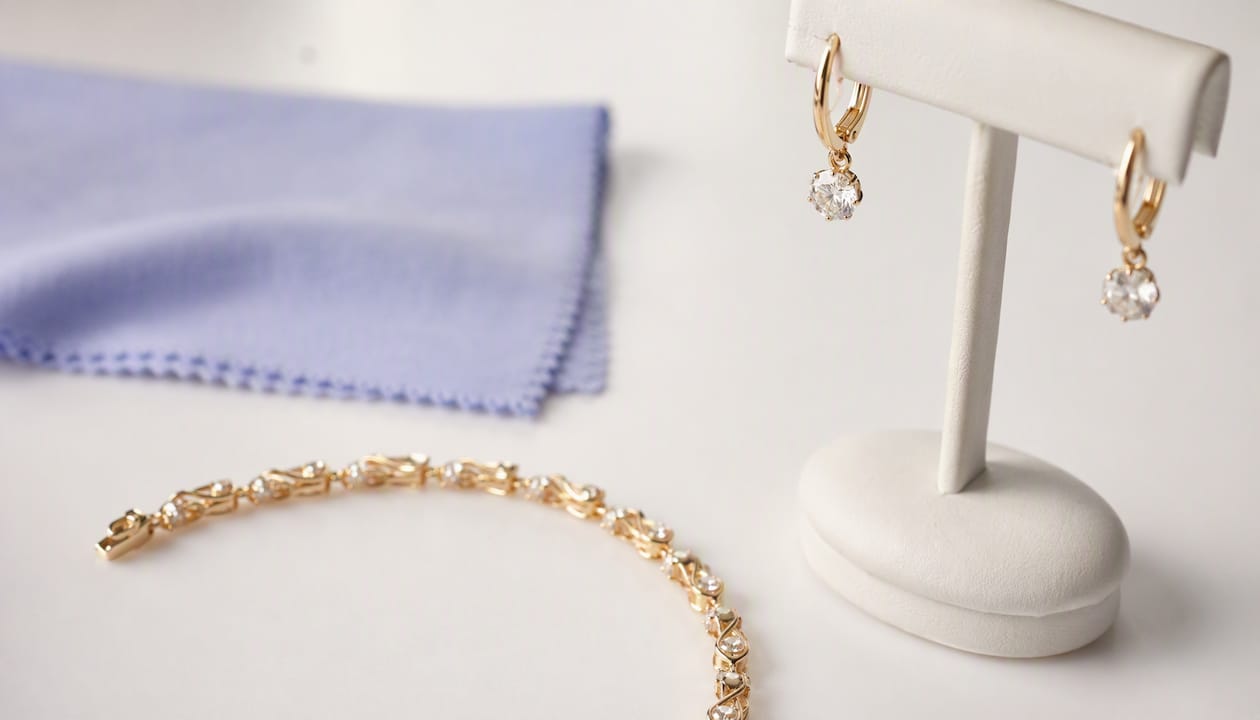
For images, deliver a minimum 2000px white-background hero, 6-angle views for pieces over $500, a lifestyle shot, and file names that map directly to SKUs (e.g., RNG-14KY-RD-1.0-SZ7_hero.jpg). For certified diamonds, scan certificate PDFs and attach them as downloadable product fields — this visibly increases conversion and reduces returns.
Pro Tip: Build your attribute dictionary in a shared spreadsheet before touching the import tool. One agreed-upon list of field names and accepted values prevents the most common source of mapping errors downstream.
Which distribution model fits your wholesale operation?
Three models, three different publishing requirements. Choose based on your margin targets, fulfillment capacity, and how quickly your inventory turns.
- Stocked (merchant holds inventory). The retailer buys and warehouses product. Inventory sync can run hourly or daily. Pricing is fixed at wholesale. Lower fulfillment risk for the supplier; higher capital commitment for the retailer.
- Dropship (supplier ships to end customer). The retailer sells, the supplier fulfills. Requires near-real-time inventory sync via webhooks to prevent oversells. Lead time must display accurately on the product page. Margin is typically higher for the retailer, but the supplier bears fulfillment complexity.
- Syndicated wholesale (supplier publishes a feed; retailers order through a B2B portal). The supplier maintains a live wholesale catalog. Retailers browse, select, and place orders into the portal. This model suits high-SKU suppliers distributing to many retail partners simultaneously, and it’s where catalog automation delivers the clearest return: templates, attribute rules, and channel connectors turn manual listing work into repeatable publishing.
For dropship and syndicated models, target inventory sync SLAs of 15 minutes or better for high-turn SKUs. Webhooks are the most reliable mechanism; scheduled CSV pulls work for slower-moving wholesale lines.
How do Shopify, WooCommerce, and Magento each handle jewelry feeds?
A hub-based B2B platform is the primary connector. It formats and propagates updates to all channels from a single endpoint, which is far more maintainable than direct supplier integrations multiplied across every storefront. Here’s what each platform requires on top of that foundation.
Shopify maps jewelry attributes to metafields. Use Shopify’s Industry Pack or custom metafield definitions for metal and gemstone. Watch the 3-option variant ceiling — a ring available in 3 metals, 5 sizes, and 2 stone options exceeds it, so plan your variant architecture before import. Structured attribute fields for metal, metal purity, and gemstone are required for Google Shopping impressions; generic descriptions alone won’t surface the item in subcategory queries.
WooCommerce requires you to register global product attributes — metal, stone, size, finish, karat — before importing supplier catalogs. Doing this after the fact creates duplicate taxonomy terms that are painful to clean up. Use webhooks or a scheduled plugin sync for inventory updates rather than manual CSV uploads.
Magento and custom storefronts need field-level mapping, GTIN/SKU support, and performance testing for media-heavy pages. High-resolution 6-angle image sets can slow page load significantly without proper CDN configuration.
Integration checklist before go-live:
- Endpoint authentication confirmed
- Sample payloads validated against storefront field schema
- SKU mapping verified end-to-end
- Image URLs publicly accessible (no auth-gated CDN paths)
- Inventory update cadence set and tested
- Order routing and fulfillment webhooks fire correctly
Pro Tip: A jewelry-specific API hub that handles granular attributes, live metal pricing feeds, and certificate linking prevents the “Luxury Data Gap” — the point where your fine jewelry data is too thin to support the trust signals high-value shoppers need before they buy.
How do you build collection pages that actually rank and convert?
Front-load metal and gemstone in product titles. “14K White Gold Round Diamond Engagement Ring 1.00ct VS1” outperforms “Beautiful Engagement Ring” in every subcategory query. Google Merchant Center requires metal and gemstone declared in separate structured fields — not only in the description — or the product falls into a generic category and loses impressions.
For category pages, use intentional URL structures (/shop/rings/, /shop/14k-gold-engagement/), unique H1s, and short descriptive copy targeting collection-level keywords. Each collection page should have its own identity, not a copy-paste of the parent category.
Schema matters. Add JSON-LD Product schema with name, image, offers (price and availability), material, aggregateRating when you have reviews, and a certification link for certified stones. Validate with Google’s Rich Results Test before go-live.
For image SEO, alt text should follow the same attribute-first pattern as titles: “14K yellow gold round diamond solitaire ring, 1.00ct, VS1 clarity.” For product descriptions, fine jewelry benefits from a technical spec block followed by a brief sensory paragraph; fashion lines can lead with story and close with specs.
What QA tests must you run before going live?
Run inventory lock, pricing rule, and order routing tests before any public syndication. A single oversell on a certified diamond piece is expensive to resolve and damages retailer trust immediately.
- Push a stock-level change for one SKU and confirm it propagates to all connected storefronts within your SLA window.
- Select every variant combination in the cart and confirm correct pricing, availability, and add-to-cart behavior.
- Click every certificate download link and confirm the correct PDF opens.
- Run a test order through 3D Secure checkout for a high-value item and confirm shipping insurance options display.
- Simulate a partial-fulfillment scenario and confirm the order routing webhook handles it correctly.
- Import a small batch to staging, validate attribute mapping field by field, and run an end-to-end test order before touching production.
Pro Tip: Set up automated alerts for sync failures, inventory mismatches, and feed validation errors before go-live. The ops team should receive a notification within minutes of a failure, not discover it from a retailer complaint.
What does post-launch operations actually look like day to day?
Post-launch, run a 30/60/90 monitoring cadence focused on inventory accuracy, sell-through rate, and feed health. The catalog is a living thing — it needs regular attention to stay accurate and competitive.
Syndication cadence by velocity:
- High-turn SKUs: near-real-time sync (webhooks, under 15 minutes)
- Medium-velocity items: hourly or 4-hourly polling
- Low-turn wholesale lines: daily feed push is sufficient
For returns, map return windows clearly by distribution model. In a dropship arrangement, document who bears return shipping before the first order ships. For high-value returns, capture the serial number and certificate ID at the point of return authorization — this is the only reliable way to confirm the correct item came back.
KPIs to monitor weekly:
- Feed error rate (target near zero)
- Inventory drift rate between platform and storefront
- Time-to-fulfill by distribution model
- Conversion rate by collection
- Cart abandonment on variant selection pages
A PIM-led approach keeps product information consistent across storefronts, marketplaces, and physical stores — and when suppliers can update their own records directly through a supplier portal, data refresh cycles speed up noticeably.
What should you require from a B2B jewelry platform?
The non-negotiables: a jewelry-specific product-data model, real-time inventory sync, order routing, certificate linking, and feed validation tools. Everything else is a nice-to-have until these are confirmed.
Feature checklist:
- Attribute normalization with jewelry-specific field templates
- Variant grouping rules (size, metal, stone as options, not separate products)
- Channel templates for Shopify, WooCommerce, Magento, and custom storefronts
- Webhook support for real-time inventory and order events
- Published SLA and uptime commitment
- Onboarding and integration support from a team that knows jewelry data
- Vendor web design services for suppliers who need feed-ready digital presence
Trust signals to request from any vendor: customer case studies showing reduced feed error rates or faster launch timelines, a sample PIM schema for fine jewelry, demonstrated integrations with your target storefronts, and an onboarding success metric (how long does a typical supplier take to go live?).
Hub-based integration reduces maintenance cost compared with multiple direct connections. One endpoint formats and propagates product updates to all channels, which means a metal price change or a new size option updates everywhere simultaneously rather than requiring manual edits per storefront.
How do you evaluate syndication tools for wholesale jewelry?
The evaluation criteria differ from general ecommerce platforms because jewelry data is structurally complex. A tool that works well for apparel will struggle with gemstone clarity grades, certificate IDs, and live metal pricing.
Score vendors on these dimensions:
- Data model depth: Does it support metal purity, gemstone cut/clarity/weight, and certification linking as native fields, or do you have to hack them into generic custom fields?
- Pricing flexibility: Can it handle tiered wholesale pricing, MAP enforcement, and live gold price adjustments without manual intervention?
- Channel breadth: Does it connect to your retailers’ actual storefronts, or does it require retailers to adopt a new system?
- Onboarding speed: How long does a typical supplier take from signed agreement to first live feed? Weeks is acceptable; months is a red flag.
- Support quality: Is there a team with jewelry industry knowledge, or is support generic SaaS helpdesk?
A jewelry-specific API hub that supports dynamic line sheets, tiered pricing, and wholesale portals driven by live inventory gives you B2B features that general ecommerce platforms simply don’t offer out of the box.
Legal and compliance standards for selling jewelry online in the U.S.
The Federal Trade Commission’s Guides for the Jewelry, Precious Metals, and Pewter Industries govern how you describe metals and gemstones in product listings. Misrepresenting karat, metal content, or gemstone origin is an FTC violation, not just a customer service problem.
Key requirements:
- Metal disclosure: State karat and metal content accurately. “14K gold” must be at least 14 parts gold per 24. Plated items must be labeled as plated, not described as solid.
- Gemstone disclosure: Natural, lab-grown, and simulant stones must be clearly distinguished. “Diamond” without qualification implies natural origin under FTC guidelines.
- Country of origin: Required on imported jewelry under U.S. Customs regulations.
- Conflict minerals: If your supply chain includes gold, tin, tantalum, or tungsten from covered regions, Dodd-Frank Section 1502 reporting obligations may apply to publicly traded companies in your supply chain.
- Sales tax: Jewelry is taxable in most U.S. states. Economic nexus thresholds vary by state; once you cross a state’s threshold, you must collect and remit sales tax there.
- Consumer Product Safety: Jewelry marketed to children must comply with CPSC lead content limits (under 100 ppm for children’s metal jewelry).
For certified diamonds, GIA and IGI certificates are the recognized industry standards. Linking the certificate ID to the product record is both a trust signal and a compliance best practice for high-value transactions.
How do you onboard retailers and build smooth wholesale partnerships?
Retailer onboarding is where most wholesale launches slow down. The supplier’s data is ready; the retailer’s storefront isn’t configured to receive it. Closing that gap requires a structured onboarding workflow, not just an email with a CSV attached.
Best practices:
- Provide retailers with a feed specification document before onboarding begins — field names, accepted values, image URL format, and variant structure.
- Run a sandbox import with a 10–20 SKU sample before pushing the full catalog. This surfaces mapping issues without creating a mess in production.
- Assign a dedicated onboarding contact on the supplier side for the first 30 days. Retailers who can reach a real person with data questions go live faster.
- Use a supplier portal that lets retailers browse, select, and configure the feed themselves. Platforms with supplier portals reduce manual entry errors and speed data refresh cycles for both sides.
- Document the order routing workflow in writing before the first live order. Who confirms the order? Who sends tracking? What happens if an item is out of stock after the order is placed?
For ongoing collaboration, schedule a monthly feed health review with each retail partner for the first quarter. After that, quarterly reviews are usually sufficient unless sell-through data shows a problem.
How should wholesale jewelry disputes and support be handled?
Wholesale jewelry transactions involve high-value items, certification dependencies, and multi-party fulfillment chains. A dispute process that works for a $30 apparel item doesn’t scale to a $5,000 certified diamond.
Support structure to put in place:
- A written dispute policy shared with retail partners at onboarding, covering return windows, condition requirements, and who initiates the return authorization.
- For high-value items, require photo documentation of the item and packaging at the point of return initiation. Certificate ID and serial number must match the original order record.
- Order discrepancies (wrong item, missing stone, damaged in transit) should have a resolution SLA — 48 hours to acknowledge, 5 business days to resolve is a reasonable starting target for wholesale.
- Maintain a transaction log that includes the certificate ID, order ID, and fulfillment timestamp for every high-value shipment. This is your primary evidence in any dispute.
- For payment disputes in a B2B context, net terms agreements should specify late payment fees and dispute escalation steps in writing before the first order.
Shipping insurance for high-value items is not optional. Require it as a condition of the wholesale agreement and document the carrier and policy number per shipment.
How do you protect your jewelry designs and manage fraud risk?
Intellectual property protection and fraud prevention are two distinct problems, but both require proactive systems rather than reactive responses.
IP protection:
- Copyright attaches automatically to original jewelry designs in the U.S., but registration with the U.S. Copyright Office creates a public record and enables statutory damages in infringement cases. Register original designs before publishing them online.
- For distinctive brand elements (logos, collection names, trade dress), U.S. trademark registration through the USPTO provides the strongest protection.
- Watermark product images with your brand name or SKU before distributing them to retail partners. This doesn’t prevent copying, but it creates a clear chain of evidence if a design appears on an unauthorized site.
- Include IP ownership clauses in your wholesale agreements. Retailers receive a license to display your product images and descriptions; they do not acquire ownership of the underlying assets.
Fraud prevention:
- For B2B transactions, verify new retail partners against business registries before extending net terms or dropship access.
- Require 3D Secure authentication for high-value consumer transactions on connected storefronts.
- Monitor for unusual order patterns — multiple high-value orders to new shipping addresses, or orders that bypass standard checkout flows.
- For certified diamonds, the certificate ID is your primary fraud-prevention tool. Confirm the certificate number against the GIA or IGI database before shipping any high-value stone.
Jewelcloud makes your next collection launch faster and cleaner
Suppliers and retailers who try to manage wholesale collection launches through spreadsheets and manual CSV uploads consistently hit the same wall: mismatched attributes, inventory drift, and retailer storefronts that display the wrong price or the wrong variant. Jewelcloud is built specifically to solve that problem.
With Jewelcloud, your product data is structured against a jewelry-specific attribute model from day one — metal, purity, gemstone, cut, clarity, certification, and size handled as native fields, not workarounds. DiamondLink connects GIA and IGI certificate IDs directly to product records, giving retail partners the trust signals that move high-value pieces. Inventory syncs in near-real-time across connected storefronts, and the platform’s vendor web design services mean your digital presence is feed-ready before your first retailer goes live.
For suppliers ready to distribute to qualified retail partners, Jewelcloud vendor membership is the direct path to getting your collections in front of the right buyers.
What the data actually tells us about launch risk
The conventional wisdom in wholesale jewelry is that the hard part is the product itself — the design, the sourcing, the pricing. The data says otherwise. Feed errors, variant mismatches, and inventory drift are the most common causes of failed or delayed launches, and they are almost entirely preventable with the right data infrastructure in place before the first SKU goes live.
What most suppliers underestimate is how much retailer trust depends on data quality, not just product quality. A retailer who receives a feed with inconsistent metal purity values or missing certificate links will deprioritize that supplier’s collection, regardless of how beautiful the pieces are. The product earns the sale; the data earns the shelf space.
The single operational habit that most reduces launch risk is maintaining one source of truth for product data — a centralized record that every channel reads from, rather than parallel spreadsheets that drift apart over time. Every integration problem, every oversell, every mismatched variant traces back to a moment when two systems had different versions of the same fact.
Sources
Primary sources used in this guide:
- WooCommerce Jewelry Integration: 5-Stage Setup Guide
- Shopify Product Import for Jewellery and Accessories Stores | Importier Blog
- Streamlining Supplier Data Management for Jewelry Retailers
- Product Catalog Automation for Jewelry Sellers: Less Manual Work, Fewer Listing Mistakes -
Your next steps: