


Private label jewelry manufacturing means a factory produces finished jewelry that you sell under your own brand name. You control the branding, packaging, and pricing. The manufacturer handles production. That clean division of labor is what makes this model so practical for small brands and entrepreneurs who want a real product line without building a factory.
This differs from OEM (original equipment manufacturer, where you supply the design) and ODM (original design manufacturer, where you pick from the manufacturer’s existing catalog). Private label sits between those two, as explained in the FTC Jewelry Guides context around truthful branding and disclosure. For a small brand, the immediate payoff is lower production overhead, faster time to market, and full control over how your collection looks and feels to customers.
- Brand control: Your logo, your packaging, your story.
- Lower overhead: No factory, no equipment, no production staff.
- Speed: Ready designs can ship in weeks; full custom takes months.
- Flexibility: Start small, test, then scale or go fully custom.
Pro Tip: Before you contact a single manufacturer, write a one-page SKU plan listing your target price points, materials, and quantities. Manufacturers respond faster and more accurately when you arrive with specifics.
Table of Contents
- How do you evaluate manufacturers and what should you ask?
- How do B2B platforms help you source and launch faster?
- What does a practical 90-day launch plan look like?
- Key Takeaways
- The part most guides skip over
- Jewelcloud connects you to the private label supply chain
- Useful sources
How do you evaluate manufacturers and what should you ask?
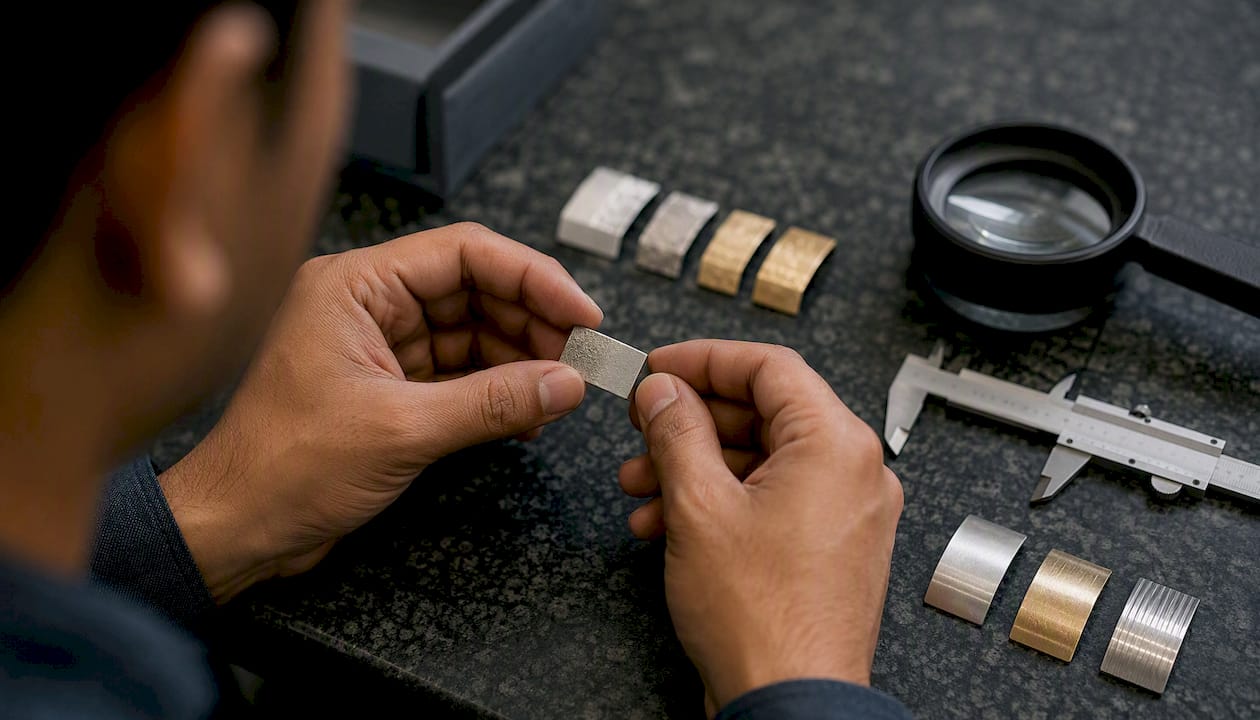
Supplier verification starts before you send a single dollar. Request these items upfront:
- Factory photos and video of the production floor
- References from current clients (ask for brands in a similar size range)
- Written QC process and inspection checkpoints
- Material certificates for metals and stones
- Third-party testing availability (nickel, lead, cadmium)
- Production capacity and realistic lead times in writing
Questions to ask on your first supplier call:
- What is your minimum order quantity per style and per order?
- What does your golden sample process look like, and what is the turnaround?
- What is the plating thickness on gold-filled or gold-plated pieces?
- How do you handle stones — what grades, what setting methods?
- What is your policy if bulk production deviates from the golden sample?
- Can you provide reorder consistency across multiple production runs?
- Do you offer private-label packaging, and what are the setup costs?
Red flags: vague lead times (“around 4–8 weeks, depends”), no factory photos, inability to produce a golden sample, inconsistent answers about stone specs, and pressure to skip sampling and go straight to bulk.
Pro Tip: Send a short sample-request brief in writing before your call. Include your target metal, finish, stone type, and quantity. Manufacturers who respond with specific questions are the ones worth your time.
How do B2B platforms help you source and launch faster?
A B2B jewelry platform like Jewelcloud changes the sourcing equation for small brands. Instead of cold-emailing factories and waiting weeks for catalog PDFs, you access structured product data, inventory feeds, and digital wholesale catalogs in one place.
Key platform features that matter for a private label launch:
- What Is Private Label Jewelry? How It Works & Benefits
- What Is Private Label Jewelry? A Practical Guide From a Jewelry Manufacturer - Leading Wholesale Custom Jewelry Manufacturers & Suppliers in China
- Private Label Jewelry | Create Your Jewelry Collection – Boma Jewelry
- Private Label Jewelry Manufacturing | Jewelry Touch
- What is jewelry private label? Is it right for me? – Loytee
For a brand expanding its assortment, platform-driven retail growth means adding new SKUs in days rather than months, with product data that is already formatted for your store.
Pro Tip: When evaluating a B2B platform, check whether the product data includes high-resolution images, accurate metal and stone specs, and pricing tiers. Incomplete data creates more work, not less.
What does a practical 90-day launch plan look like?
- Days 1–10: Finalize your SKU list (5–10 styles), confirm target price points, and identify 3–5 manufacturer candidates.
- Days 11–20: Send sample briefs, request quotes, and place sample orders with your top two candidates.
- Days 21–40: Review samples, request revisions if needed, and select your golden sample for each approved style.
- Days 41–50: Confirm packaging specs, plan product photography, and finalize your launch pricing.
- Days 51–65: Place your initial bulk order. Build in a 10–15% budget buffer for rework, shipping delays, or duty adjustments.
- Days 66–80: Receive and inspect bulk shipment against golden samples. Flag any QC issues immediately.
- Days 81–90: Launch marketing, publish product pages with manufacturer-supplied or studio photography, and open for orders.
Budget buffers to plan for:
- Rework or re-sampling: 10–15% of sample budget
- Shipping and duties: 8–15% of product cost depending on origin
- Photography and packaging design: $500–$2,000 for a small launch
- Platform or marketplace fees: varies by channel
Pro Tip: Do not wait for perfect inventory to start marketing. Use sample photography and a preorder model to validate demand before your bulk shipment arrives.
Key Takeaways
Private label jewelry manufacturing gives small brands a direct path to a branded product line without building production infrastructure.
| Point | Details |
|---|---|
| Definition | A manufacturer produces jewelry sold under your brand name; you control branding, pricing, and marketing. |
| Three development levels | Ready designs, light customization, and full custom each carry different MOQs, costs, and lead times. |
| Golden sample is non-negotiable | Approve a reference piece before bulk production to avoid costly rework. |
| U.S. compliance baseline | FTC Jewelry Guides govern metal marking, karat claims, and diamond disclosure for every U.S. brand. |
| Jewelcloud accelerates launch | Structured product data, inventory syncing, and digital catalogs cut weeks off a private label launch. |
The part most guides skip over
Most private label content focuses on the glamorous part: designing your collection. What actually determines success is the unglamorous middle: how well you manage the golden sample process, how clearly you communicate specs in writing, and how honestly you assess your own capacity to handle QC disputes with a factory overseas.
The brands that struggle are almost always the ones who rushed sampling to save two weeks, then spent three months resolving a bulk order that did not match what they approved. The brands that scale are the ones who treat the golden sample as a contract, not a formality.
There is also a tendency to underestimate how much of your launch timeline is controlled by your manufacturer’s production queue, not your own schedule. Building a 15–20% time buffer into every milestone is not pessimism. It is how experienced operators stay on schedule.
One more thing worth saying plainly: starting with ready designs and a B2B platform is not a compromise. It is a smart way to test product-market fit before committing to tooling costs and custom molds. Many strong jewelry brands built their first $100K in revenue on manufacturer catalog pieces with their own branding, then used that cash flow to fund fully custom development. The staged approach is the strategy, not a stepping stone away from it.
Jewelcloud connects you to the private label supply chain
Sourcing private label jewelry through scattered factory emails and PDF catalogs costs you time you do not have. Jewelcloud gives you a structured alternative: a B2B platform where manufacturers, designers, and diamond dealers list their wholesale inventory with standardized product data, ready to sync with your store.
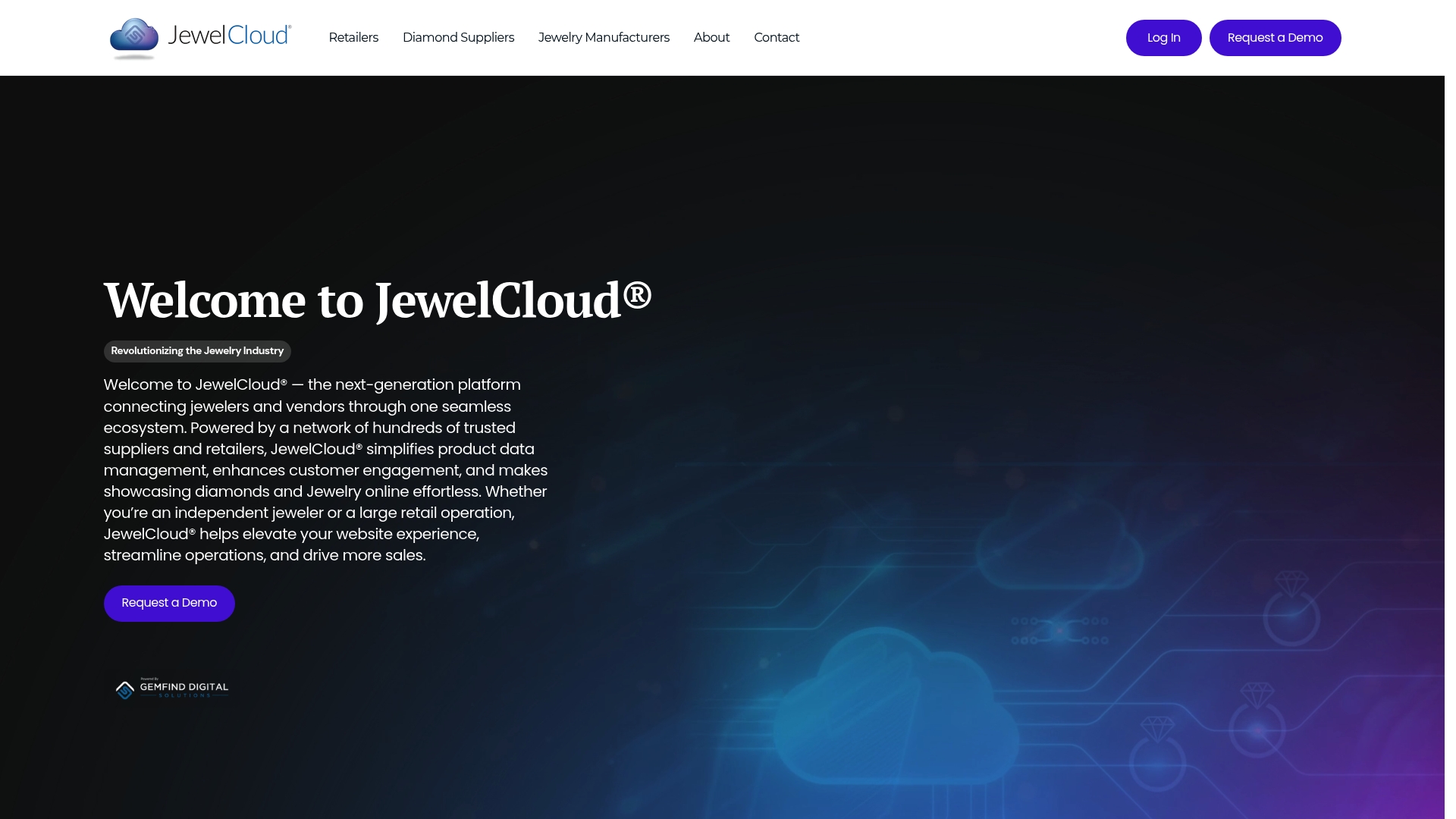
For suppliers, listing on Jewelcloud means your private label collections reach qualified retail buyers without the overhead of a traditional sales team. For retailers, it means browsing real manufacturer catalogs, accessing accurate specs, and launching new SKUs faster than any cold-outreach process allows. Jewelcloud also offers custom vendor web design for suppliers who want a branded digital presence alongside their platform listing. Ready to see how it works? Explore Jewelcloud’s platform and connect with the manufacturers and brands already inside the network.
Useful sources
- What Is Private Label Jewelry? How It Works & Benefits — Best starting point for definitions, branding roles, and packaging options.
- Private Label Jewelry: A Practical Guide From a Jewelry Manufacturer — Detailed production workflow, development levels, and golden sample guidance.
- Boma Jewelry Private Label — U.S.-based and sustainable private label options; strong on sampling practices.
- Jewelry Touch Private Label Manufacturing — Full-service manufacturing capabilities including plating, QC, and compliance coordination.
- What Is Jewelry Private Label? Is It Right for Me? — Frames private label as a staged launch strategy and explains the ODM model clearly.
| Source | Best For |
|---|---|
| Nakassi | Definitions, branding roles, packaging |
| Evyny Jewelry | Production workflow, development levels |
| Boma Jewelry | Sampling practices, U.S.-based options |
| Jewelry Touch | Manufacturing capabilities, QC, compliance |
| Loytee | Launch strategy, ODM model explanation |