


A jewelry brand authorized dealer network is a B2B system that connects a brand to its approved retail partners through standardized product data, synced inventory, tiered pricing, and controlled access. Instead of emailing spreadsheets or faxing order forms, brands publish a single structured catalog from which qualified retailers can pull data, price items, and sell against in real time.
Here’s the claim we’ll back up with evidence: treating your product data as a distributable asset, not a static PDF, is what actually scales wholesale relationships and cuts returns.
- Brands gain visibility across a network of vetted retailers without warehousing extra stock.
- Retailers gain instant access to accurate specs, pricing, and imagery they can sell or showcase digitally.
JewelCloud runs on exactly this model, giving you a useful reference point as we break down how these networks actually work.
Key Takeaways
Structured, synced product data is what turns a jewelry brand’s list of retailers into a functioning wholesale distribution channel that scales without added inventory risk.
| Point | Details |
|---|---|
| Data is the asset | Treat your catalog as a distributable product with standardized attributes, not a static file you email out. |
| Inventory sync prevents oversells | Real-time available-to-promise data eliminates the double-commitment problem that plagues batch-updated catalogs. |
| Structured feeds convert better | Shopify reports that structured catalog feeds convert better than scraped, unstructured listings. |
| Governance protects the network | Tiered access, revocable credentials, and audit logs keep dealer relationships accountable and secure. |
| JewelCloud operationalizes the model | JewelCloud gives suppliers a structured feed and retailers a live catalog, built specifically for jewelry’s certification and attribute needs. |
Table of Contents
- The Building Blocks of a Jewelry Brand Qualified Retailer Network
- What Business Benefits Come From an Authorized Dealer Network?
- How Do You Roll Out an Authorized Dealer Network?
- How Do You Govern Dealer Authorization and Access?
- Which Integration Pattern Fits Your Dealer Network?
- Which Metrics Prove the Network Is Working?
- How JewelCloud Puts These Components Into Practice
- Training and Support Best Practices for Dealer Partners
- Strategies for Maintaining and Updating Product Data Consistency Over Time
- Security Measures and Data Privacy Considerations Within the Network
- Should You Build or Buy Your Dealer Network Platform?
- Ready to Put Your Catalog to Work?
- Sources
The Building Blocks of a Jewelry Brand Qualified Retailer Network
A working authorized jewelry dealer network rests on four pieces: a catalog schema, inventory sync, a dealer portal, and access controls. Skip one, and the whole system gets shaky.
Start with the catalog. Jewelry data is unusually complex compared to most retail categories, so your minimum attribute set needs metal purity, gemstone certification details, ring and chain size ranges, certificate links (GIA, IGI, or similar), and high-resolution media that can render zoom and 360-degree views. Miss any of these and a retailer either guesses or skips your line entirely.
- Catalog schema — structured fields, not free-text descriptions, so every SKU means the same thing to every retailer.
- Inventory sync — an available-to-promise feed that shows real-time stock, preventing two retailers from selling the same one-of-a-kind piece.
- Dealer portal and API — the access layer where retailers browse, price, and pull data, often gated by pricing tier or membership level.
- Validation and media management — automated checks that reject bad data (missing certificates, low-res images) before it reaches a retailer’s storefront.
Middleware typically sits between your ERP and the retailer-facing portal, handling error flagging and format conversion so bad records don’t propagate downstream.
Pro Tip: Build your attribute list around what a shopper needs to make a buying decision without touching the piece, not just what your ERP happens to store.
What Business Benefits Come From an Authorized Dealer Network?
The commercial case is straightforward: structured data sells better and costs less to maintain than the alternative. Shopify’s research on AI and search behavior found that structured catalog feeds convert roughly twice as well as AI-generated results pulled from scraped, unstructured product pages. For jewelry, where AI shopping agents and marketplaces increasingly parse listings algorithmically, that gap in conversion is a gap in revenue.
The conversion math: feeds built on clean, attribute-level data outperform scraped listings by a wide margin, according to Shopify. That’s not a marginal SEO tweak. It’s a structural advantage.
Beyond conversion, the benefits stack up on both sides of the relationship:
- Brands launch new collections into retailer catalogs in days, not weeks, without carrying extra inventory.
- Retailers expand their assortment instantly using real supplier data instead of building product pages from scratch.
- Everyone sees fewer returns, because consistent attribute data (accurate sizing, honest treatment disclosures) sets correct expectations before purchase.
- Operations teams spend less time reconciling orders when the network automates allocation and confirmation.
How Do You Roll Out an Authorized Dealer Network?
Launching a jewelry retailer network works best as a staged rollout, not a big-bang switch. Rushing integration before your data is clean just moves the chaos downstream to your retail partners.
- Define your KPIs and minimum viable schema first. Decide what “done” looks like (inventory accuracy, time-to-list) before building anything.
- Map your integration surfaces. Identify where product truth lives, your PIM, ERP, or storefront, and decide which data moves in real time versus in scheduled batches.
- Pilot with two to five vetted dealers. A small pilot group surfaces broken workflows and unclear pricing policies before they scale into a hundred angry retailers.
- Roll out in phases with monitoring built in. Instrument alerts for sync failures and keep a rollback plan ready for the first few weeks.
A 2025 jewelry commerce case study documents a real-time integration backbone that eliminated inventory mismatches and automated order workflows, letting the brand scale retail and wholesale channels together rather than treating them as separate systems patched with manual work.
Pro Tip: Run your pilot with dealers who already complain about your current process. They’ll stress-test the system faster than your friendliest accounts ever will.
How Do You Govern Dealer Authorization and Access?
Governance is what separates a real dealer network from an open catalog anyone can scrape. Most networks use one of three authorization models: an approved retailer list maintained manually, contract-linked accounts tied to a signed dealer agreement, or tiered entitlements that unlock more data (like cost pricing) as a retailer proves volume.
Access control mechanisms should match the sensitivity of what’s exposed:
- API keys or single sign-on for portal access, so credentials can be revoked instantly if a relationship ends.
- IP restrictions for high-value catalog segments, like unset diamonds or one-of-a-kind pieces.
- Per-account pricing visibility, since wholesale tiers rarely make sense as public information.
- Audit logs that track who pulled what data and when, which matters when a retailer disputes an order.
Tie all of this to an onboarding checklist and a clear service level agreement for data updates. A retailer who doesn’t know how fast your catalog refreshes will make bad promises to their own customers.
Which Integration Pattern Fits Your Dealer Network?
The architecture decision that matters most is where your canonical product data lives. Most jewelry brands are better served by a centralized PIM (product information management) system rather than letting the ERP or storefront act as the source of truth, since a centralized catalog approach eliminates the data silos that fragment brand consistency across channels.
Middleware sitting between your PIM and each retailer connection handles the unglamorous but critical work: attribute normalization, media validation, and conflict resolution when two orders hit the same SKU simultaneously.
- Real-time APIs fit high-value, low-volume SKUs, engagement rings, fine diamonds, where an oversell is costly and reputational.
- Scheduled batch feeds fit lower-value, higher-volume items like stock chains or basic studs, where hourly accuracy isn’t worth the engineering overhead.
- Retailer-facing dealer portals need both: a fast API for checking stock and a stable feed for bulk catalog import.
Pro Tip: Test your connectors under simultaneous-order conditions before launch, not after your first double-sold ring generates an angry phone call.
Which Metrics Prove the Network Is Working?
Four numbers tell you whether your jewelry brand distributors setup is actually delivering: inventory accuracy (how often the portal’s stock status matches reality), time-to-list (how fast a new SKU reaches retailer catalogs), conversion lift, and return rate.
- Available-to-promise accuracy prevents oversells; track it weekly during your first quarter live.
- Time-to-list should drop sharply once you move off manual spreadsheet updates, since real-time inventory sync removes the reconciliation work that eats days between price changes and retailer visibility.
- Return rate on structured-data listings should trend down as attribute completeness improves.
Run a before-and-after comparison on your top-selling SKUs to isolate what structured data actually changed.
How JewelCloud Puts These Components Into Practice
JewelCloud’s platform structures jewelry-specific attributes (metal purity, certification, size ranges) into a standardized feed that participating retailers pull directly, matching the attribute-level standardization that AI shopping agents and marketplaces increasingly require to surface listings accurately.
- Suppliers load merchandise once and reach a network of qualified retail partners without shipping consignment inventory.
- Retailers expand their online assortment using live vendor data instead of building product pages from scratch.
- The platform addresses double-commitment by moving allocation to order confirmation rather than relying on static batch updates.
Structured, standardized product data isn’t a nice-to-have layer on top of the business. For a diamond dealer or manufacturer trying to reach retailers without warehousing extra stock, it’s the mechanism that makes the relationship work at all.
Suppliers can review the vendor benefits that come with joining a structured network like this one.
Training and Support Best Practices for Dealer Partners
A dealer network only performs as well as the retailers using it. Even a perfectly structured catalog fails if the retail team on the other end doesn’t know how to pull data, apply pricing tiers, or handle a certificate lookup.
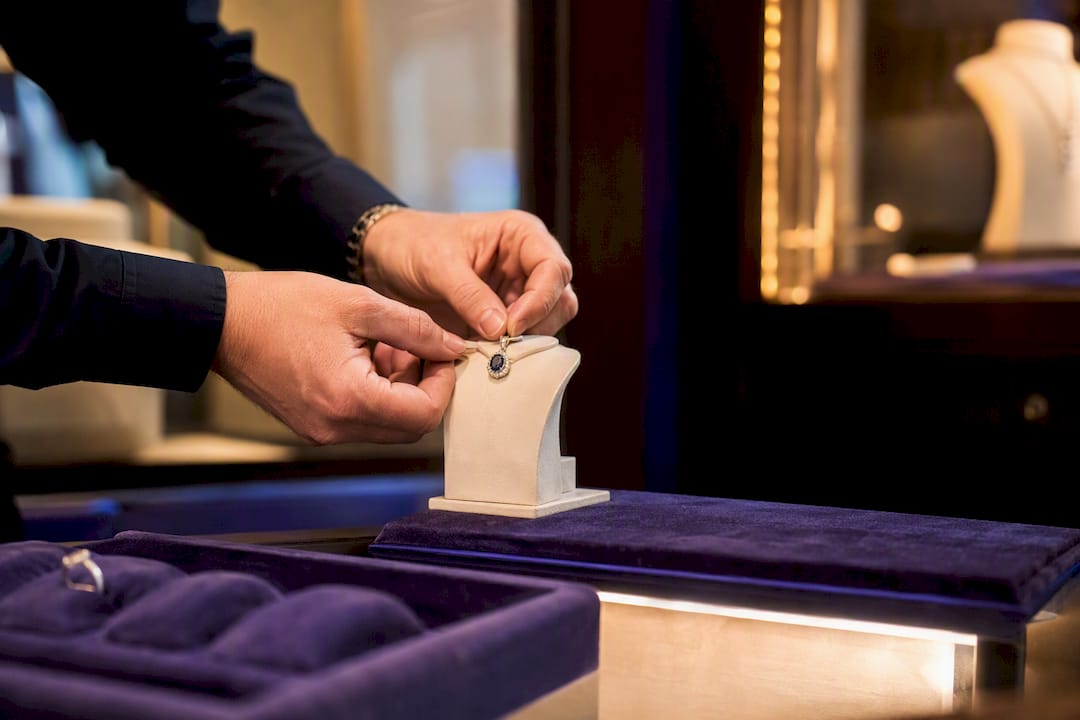
Start onboarding with a short, role-specific walkthrough rather than a single dense manual. A sales associate needs to know how to search the portal and answer a customer’s question about stone treatment. A back-office admin needs to know how sync timing affects what shows as “in stock” on their own site. Separate those tracks instead of forcing everyone through the same generic training.
Build a living FAQ around the questions that actually come in during your first ninety days. Most dealer confusion clusters around a handful of repeat issues: how pricing tiers work, what happens when a sync fails, and how to request a correction on a data error. Document those answers once, then point new dealers to them instead of re-explaining the same thing over email each time.
Assign a named point of contact for technical issues, not a generic support inbox. Dealers troubleshooting a broken feed connection during a live sale need a faster path than a ticket queue.
Finally, review usage data quarterly. A dealer who never logs into the portal or hasn’t pulled fresh inventory in months is a signal worth investigating, either they’ve lost interest, found a workaround you should know about, or they need a refresher on features they never adopted.
Strategies for Maintaining and Updating Product Data Consistency Over Time
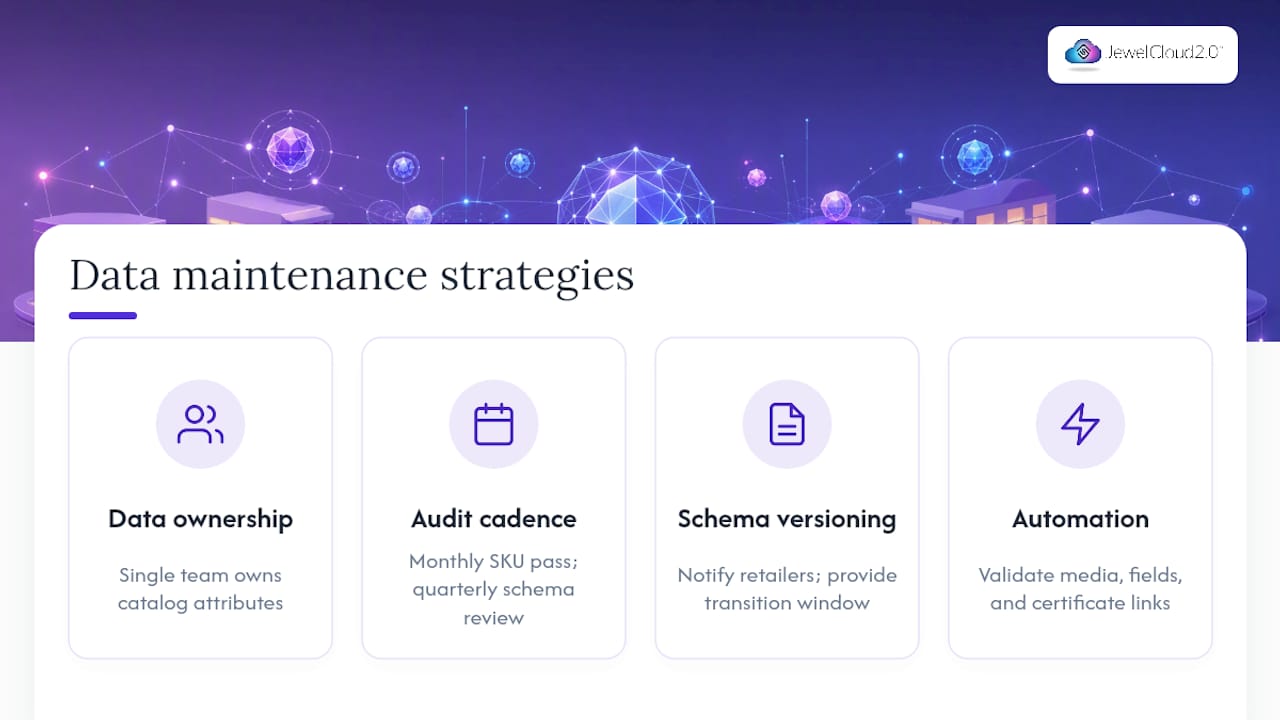
Catalog data degrades if nobody owns it. New SKUs get added with missing attributes, certificate links go stale, and pricing tiers drift out of sync with what’s actually being charged. None of this happens through negligence; it happens through the absence of a maintenance routine.
Assign clear data ownership. One team, usually product or merchandising, should hold final authority over catalog attributes, even when multiple systems feed into the PIM. Without a single owner, conflicting updates from sales, warehouse, and marketing teams create the exact inconsistency a structured catalog was supposed to eliminate.
Set a recurring audit cadence rather than reacting to complaints. A monthly pass through recently added SKUs catches missing certificates or unset attribute fields before a retailer notices them first. Quarterly, review your full attribute schema against what retailers and AI shopping agents are actually asking for. Attribute needs shift as marketplaces evolve.
Version your schema changes. When you add a new required field, like a specific gemstone treatment disclosure, give retailers advance notice and a transition window rather than breaking their integration overnight. A changelog, even an informal one, prevents the support tickets that come from silent schema changes.
Automate what you can validate. Media resolution, required-field completeness, and certificate link functionality are all things a validation script catches faster and more consistently than a human reviewer scanning a spreadsheet.
Security Measures and Data Privacy Considerations Within the Network
An authorized dealer network handles two categories of sensitive information: your wholesale pricing structure and, depending on your catalog, details about high-value or one-of-a-kind pieces that carry real theft and fraud risk if exposed publicly.
Encrypt data in transit and at rest between your PIM, middleware, and retailer-facing portal. This is table stakes for any B2B integration handling pricing data, but jewelry adds a wrinkle: certificate documents and high-resolution imagery of specific pieces can also carry provenance information you don’t want floating around unsecured.
Use role-based access so a retailer’s staff sees only what their tier permits. A newly onboarded dealer probably shouldn’t see the same cost pricing or one-of-a-kind inventory as a five-year partner doing seven figures in annual volume. Tie that visibility to the entitlement tiers discussed earlier in this article, not to a blanket “all dealers see everything” policy that’s easier to build but harder to defend later.
Audit access logs regularly, and treat repeated failed login attempts or unusual data pull patterns (a dealer suddenly scraping your entire catalog) as signals worth investigating, not noise to ignore. Revoke API keys and portal access immediately when a dealer relationship ends or a contract lapses; a lingering active credential from a former partner is one of the more common and preventable security gaps in these networks.
Should You Build or Buy Your Dealer Network Platform?
Weigh four things before deciding: catalog complexity, integration effort, how fast you need to launch, and whether your team has bandwidth to maintain custom infrastructure. If your catalog spans multiple product categories with certification requirements, building from scratch usually costs more time than it saves. That’s when a purpose-built platform like JewelCloud earns its place over a custom build.
Ready to Put Your Catalog to Work?
If you’ve been managing dealer relationships through spreadsheets and email chains, JewelCloud replaces that entirely with structured feeds, synced inventory, and portal access your retail partners actually use. Suppliers load merchandise once and reach a network of qualified retailers who can source, sell, or digitally showcase it without either side carrying redundant stock.
For diamond dealers specifically, the platform’s diamond vendor benefits address certification and attribute needs that generic B2B tools weren’t built for. Retailers get to expand their assortment using real, current supplier data instead of stale catalogs pulled once a quarter.
If you’re ready to see what joining the network looks like for your business, the vendor membership page walks through signup, and it’s the fastest way to get your catalog live in front of qualified retail partners.
Sources
- AI, search, and category behavior — Shopify Enterprise blog
- Looking to automate your operations? Modernizing network inventory is the best place to start — Blue Planet blog (2024)
- From Fragmented Storefronts to a Unified, Scalable Commerce Platform — Wisdom Square (2025)
- Jewelry & watches state — Anglera blog (2026)